A Michigan player types “online slots” into Google, clicks the first ad, and has a deposit through in under two minutes. No geolocation prompt, no ID upload, no bank-grade verification. The site looks the part, pays out a small win, and asks for nothing. Three months earlier, that same person had put themselves on Michigan’s self-exclusion list.
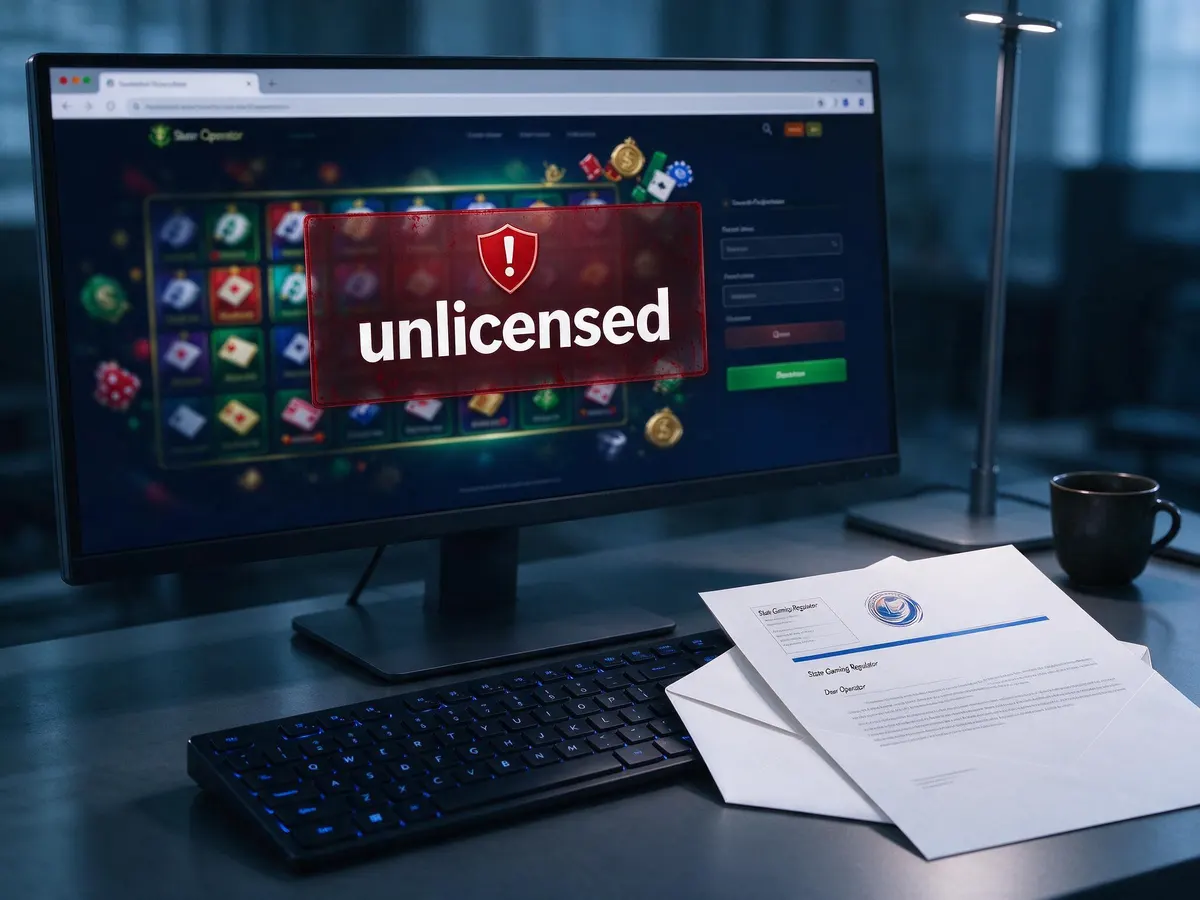
That gap is exactly what the Michigan Gaming Control Board went after when it issued cease-and-desist letters to a batch of illegal offshore casino operators accused of serving Michigan residents without a state license. The board issues these actions in waves, and the number of operators named varies from release to release. The targets here were offering online casino games, sweepstakes-style games, or sports betting to people in the state, and in every case the MGCB’s investigators concluded there was no Michigan license behind the operation.
What the MGCB letters cover
The board named the brands publicly, which is useful if you want to check a site you’ve used. The letters went to the operators of:
- Azartzona Casino
- Basepoker
- BingoMania
- BitofGold
- Cryptoplay
- Del Oro Casino
- Detective Slots
- Donbet
- Exclusive Casino
- Genie Jackpot
- Immersion Casino Online
- iWild Casino
- JacksPay
- Jurassic Slots
- L0tt0
- Lucky Charm Sweep
- Lucky Rebel
- Magicianbet
- mBit Casino
- Odds Maker
- Raging Bull Slots
- Regal Casino and Sportsbook (also known as Wager Street)
- Ronin Slots
- Runewager
- Slot Paradise
- Sloto Tribe
- Sloto’Cash Online Casino
- Spin Dinero
- SpinsTopia
- Stardust
- SunnySpins Casino
- The Online Casino
Notice the mix. Crypto casinos sit alongside sweepstakes-style brands, a poker room, a lottery-style site, and two sportsbook operations. This wasn’t a sweep of one category. It was a sweep of anyone the board believes is taking Michigan money without a Michigan license.
The self-exclusion angle is the real story
The MGCB led its announcement with a point that gets lost in most enforcement coverage: unlicensed sites are a hole in the floor of the state’s player protection system.
Licensed Michigan operators must honor the Internet Gaming and Sports Betting Responsible Gaming Database, the mechanism that lets a person voluntarily bar themselves from online gambling in the state. Offshore operators have no such obligation and no reason to care. As the board put it, somebody who has decided to step away can still open an account, deposit, and bet on an unlicensed site, frequently without realizing the site is operating outside Michigan law at all.
MGCB Executive Director Henry Williams was blunt about the consequence. “Choosing to self-exclude is one of the hardest and most courageous decisions a person can make, and in Michigan’s legal market, that choice is respected,” he said. “Offshore sites don’t respect it. They will take a deposit from someone who has asked for help and the MGCB has no way to help that person get it back.”
Read that last clause carefully, because it’s the practical heart of the matter. The regulator isn’t just saying these sites are naughty. It’s saying that once your money is on one, the state cannot retrieve it for you. Williams added that the letters put operators “on notice that our residents are not an untapped market and that anyone who thinks they can ignore our protections will hear from us.”
How big the unlicensed market has become
Michigan’s action lands against a national backdrop that explains why regulators keep escalating. An August 2025 analysis from the American Gaming Association estimated that Americans wager $673.6 billion a year with illegal and unregulated gambling operators, offshore sites included. That illegal market had grown 22% since the AGA’s previous report in 2022, with a sharp rise in illegal online casino play doing much of the work.
The behavioral shift in that research is the number worth remembering. Among online casino players, the share who stick exclusively to legal sites fell from 52% in 2022 to 24%. Nearly half now play on both legal and illegal sites, almost triple the earlier rate. On the sports side, the AGA put roughly $84 billion in annual wagers with illegal bookies and offshore operators.
In other words, most people crossing into the unlicensed market aren’t rejecting the legal one. They’re using both, often without distinguishing between them. Search ads, affiliate review sites, and slick design make the two look identical from the outside.
How to spot illegal casinos before you deposit
Here is the process I’d use, in order. It takes about five minutes and it works in any regulated US state, not only Michigan.
- Start at the regulator, not the casino. Open the state regulator’s own list of licensed internet gaming operators and search for the brand name there. In Michigan, every legal online casino operates under a license tied to one of the Detroit commercial casinos or a federally recognized tribe, so a legitimate site will be traceable to a real land-based partner. If the brand isn’t on the state’s list, that’s the end of the exercise.
- Treat footer logos as decoration. Seals, “licensed and regulated” badges, and license numbers in the footer are trivially easy to fake. Verify the number on the regulator’s site, not the operator’s.
- Check whether geolocation stops you. Legal US online casinos restrict play to inside state lines and will check your location before accepting a wager. A site that happily takes a bet no matter where you are isn’t running state-compliant geolocation, because it isn’t licensed by a state.
- Watch how casually they handle identity. Licensed operators run age and identity verification (KYC) and will not let an unverified account withdraw. Instant deposits with no documents ever requested is a warning sign, not convenience.
- Look for the self-exclusion language. A Michigan-licensed site will reference the state’s responsible gaming database and in-house tools like deposit, loss, and session limits. Vague “we promote responsible play” copy with no state program named tells you which side of the line you’re on.
- Read the terms for jurisdiction clauses. Offshore operators typically disclaim responsibility for whether you’re legally allowed to play, say disputes are settled under some far-off jurisdiction, and reserve wide discretion to void bets or withhold payouts. That is the fine print doing exactly what it was written to do.
- Be skeptical of the bonus math. Enormous match offers paired with 50x or higher wagering requirements, tight max-bet rules while a bonus is active, and low maximum cashout caps are common on unlicensed sites. A 300% bonus you can’t clear isn’t a bonus.
- Note the payment rails. Crypto-only cashiers, vouchers, obscure third-party processors, or deposits that show on your statement as something unrelated all point away from a regulated operation.
- Check whether sweepstakes framing is doing legal work. Several brands in this Michigan sweep were sweepstakes-style. “Gold coins,” “sweeps coins,” and “no purchase necessary” wording is sometimes used to approximate casino play without a casino license. Michigan’s regulator clearly doesn’t accept that framing as a free pass.
Licensed versus unlicensed: what actually changes
The games on both kinds of site may look the same. The protections around them don’t.
| Protection | Michigan-licensed operator | Unlicensed offshore site |
|---|---|---|
| Self-exclusion | Must honor the state’s Responsible Gaming Database | No obligation; can accept a self-excluded player’s deposit |
| Dispute help | Regulator can investigate complaints | MGCB has no way to recover your funds |
| Location checks | Geolocation enforced; play limited to in-state | Typically none |
| Identity and age checks | KYC required before payout | Often minimal or absent |
| Game oversight | RNG and game approval under state rules | Unverified by any US regulator |
| Payment traceability | Regulated banking and payment partners | Crypto, vouchers, opaque processors |
None of this changes the underlying math of gambling. A licensed casino still keeps a house edge, and a 96% RTP slot still returns about $96 per $100 wagered across millions of spins, not across your evening. What a license buys you is a referee: somebody with authority to audit the game, enforce your own limits, and take your complaint seriously.
If your money is already sitting on one of these sites
Be realistic about your options. The regulator has said plainly that it cannot claw back funds from an offshore operator, so your leverage is limited to whatever the site chooses to honor. Request a withdrawal early rather than letting a balance build, keep records of deposits and correspondence, and don’t chase a stuck payout with fresh deposits, which is how small problems become expensive ones.
Two things are worth doing anyway. Report the site to the MGCB, since enforcement sweeps like this one are built on exactly that kind of information. And if you find yourself on an unlicensed site specifically because you’d self-excluded from the legal ones, treat that as the signal it is and reach out to Michigan’s problem gambling support services. Deposit, loss, and session limits exist on every licensed site for a reason, and cool-off and self-exclusion tools work only inside the market that respects them.
The broader point of Michigan’s cease-and-desist letters is less about these particular brands, which can and will reappear under new names, and more about habit. The five minutes you spend checking a regulator’s license list is the single highest-value thing you can do before a deposit, and it’s the one step no offshore marketing budget can fake.