
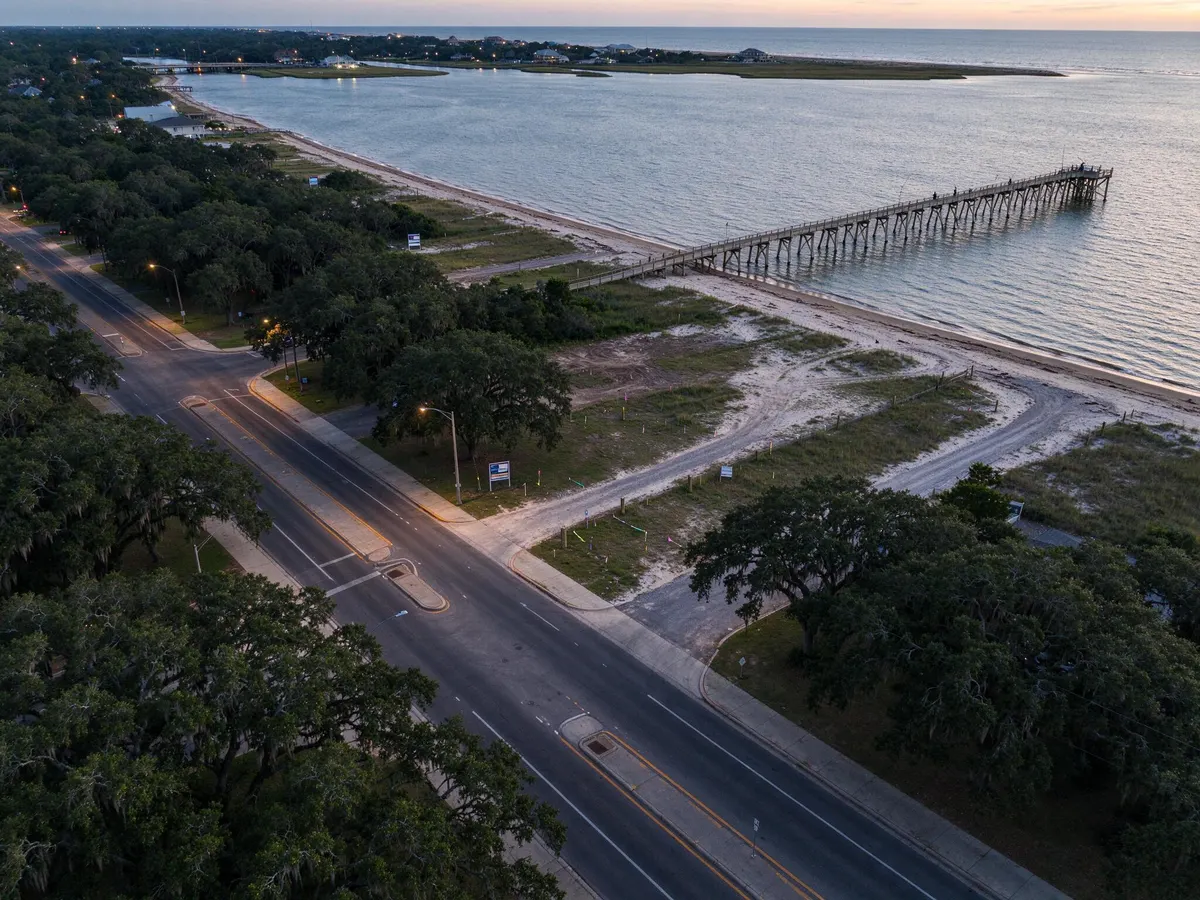
Two dozen or so residents turned up at a Biloxi City Council meeting to argue for a stand of live oaks. They brought the usual things people bring to these meetings: photographs, sentiment, the argument that once a 200-year-old tree is gone it stays gone. The council brought an arborist’s report saying most of the trees were in poor condition anyway, and voted to let the chainsaws in.
That’s the small, human version of the story. The larger version is that the Black Marlin Casino in Biloxi just cleared the municipal hurdle that has blocked the site for years, and the Mississippi Gulf Coast is now one approval away from its next casino resort.
What did the Biloxi City Council actually approve?
On Tuesday, Oct. 6, the council passed a resolution rezoning seven parcels owned by RW Development at the corner of Beach Boulevard (US Highway 90) and Veterans Avenue. Two things happened in that single vote, and both matter more than they sound:
- The parcels north of Beach Boulevard were designated waterfront, a classification that carries real legal weight in Mississippi gaming law.
- The land was established as a Gaming Establishment Overlay District, the zoning wrapper that permits casino gaming on the site at all.
The resolution also authorized the removal of 28 protected trees: 25 live oaks and three magnolias. That’s the part that filled the public comment slots. The council leaned on the arborist’s assessment, which found only three of the trees in good condition.
What the council did not do is license a casino. Zoning is permission to build the box. The state decides who gets to deal cards inside it.
Why does a pier decide whether this casino is legal?
Here is the quirk that makes the Veterans Avenue site interesting rather than routine. Mississippi law requires gaming to take place within 800 feet of the mean high-water line of the Mississippi Sound. RW Development’s land sits north of Beach Boulevard, which is to say on the inland side of the highway, away from the water.
In December 2023, the Mississippi Gaming Commission worked out the arithmetic. If Wooldridge built a $3 million pier at Veterans Boulevard, the pier would push the relevant high-water reference point such that the property north of Beach Boulevard would fall inside the 800-foot band. Site approval followed.
“Having determined that the RW Site meets all statutory and regulatory requirements, the Executive Director recommends that the Commission grant Gaming Site Approval to RW Development,” the MGC recorded in the minutes of its Special Interim Meeting on Dec. 21, 2023. The vote was unanimous.
So a $3 million pier unlocks a casino resort. Coastal gaming statutes written around shorelines and water lines produce outcomes like this, and developers along the Gulf Coast have become very good at reading them closely.
What is being built?
RW Development’s master plan is mid-sized by Gulf Coast standards rather than a Las Vegas-scale megaresort. The published figures:
| Component | Planned scale |
|---|---|
| Casino floor | 43,800 square feet |
| Hotel | 300 rooms |
| Food and beverage | Restaurant plus fine dining |
| Parking | 668 spaces |
| Required pier | $3 million, at Veterans Boulevard |
The design and construction partner is Encompass, a Kentucky firm that builds casinos for a living. Its client list includes Caesars Entertainment, Churchill Downs and Jack Entertainment, which tells you the plan is being drawn by people who have done this before rather than sketched optimistically on a napkin.
Who is behind it?
RW Development is led by Ray Wooldridge, a local businessman whose money came from Space Master International, a modular building manufacturer. He is not a casino operator, and that distinction will matter at the state level: the MGC conducts background checks on a development’s key officials as part of its review, and licensing in Mississippi is a suitability exercise as much as a paperwork one.
It is also worth noting how long this has taken. The Biloxi casino pitch at this location stalled for well over a decade before the 2023 site approval revived it. A rezoning vote in 2025 is the latest chapter in a very patient project, not a sudden one.
What happens next, and what’s the deadline?
The file now moves from City Hall to Jackson. The Mississippi Gaming Commission will review the current plan and run its background checks before any gaming license is issued.
There’s a clock on it. MGC site approval is valid for three years, and this one expires at 12:01 am on Dec. 22, 2026. If RW Development hasn’t secured a gaming license by then, and the commission doesn’t vote to extend the site approval, the project effectively goes back to the beginning, including fresh sign-offs from state authorities such as the Mississippi Department of Transportation and the Mississippi Department of Environmental Quality.
Redoing a highway access review and an environmental review is not a formality. That deadline is the single most important number in this story, more than the square footage or the room count.
Why should anyone outside Biloxi care?
Three reasons, none of them glamorous.
First, the 800-foot rule and the pier solution show how Mississippi’s shoreline gaming framework is being stretched to fit inland parcels. If the Black Marlin gets licensed on the strength of a built pier, other coastal landowners holding dry-side lots have a template. Expect more Gulf Coast gaming applications that hinge on water-line geometry rather than on genuinely waterfront land.
Second, the zoning mechanism itself. A Gaming Establishment Overlay District is how a city formally decides where casinos may exist, and Biloxi just drew a new one on the map at a major highway intersection. Casino development follows zoning, and zoning follows councils that are willing to vote for it.
Third, the trade-off on display. Twenty-eight protected trees, including 25 live oaks, were weighed against a 300-room hotel, a 43,800-square-foot casino floor and the construction and hospitality jobs that come with them. The council sided with the development, and the arborist’s report gave it the cover to do so. That calculus repeats itself up and down the coast every time a resort is proposed, and residents on the losing side of it tend to remember.
The honest caveat
Approved plans are not open casinos. Projects with rezoning in hand and a cooperative state commission still die over financing, construction costs, partner changes and expiring deadlines. Until a license is granted and ground is genuinely broken, the Black Marlin Casino in Biloxi is a well-documented intention at the corner of Beach Boulevard and Veterans Avenue.
But it is a considerably more credible intention than it was a week ago. The next real signal will come from the Mississippi Gaming Commission, and the calendar says that signal needs to arrive before the small hours of Dec. 22, 2026.