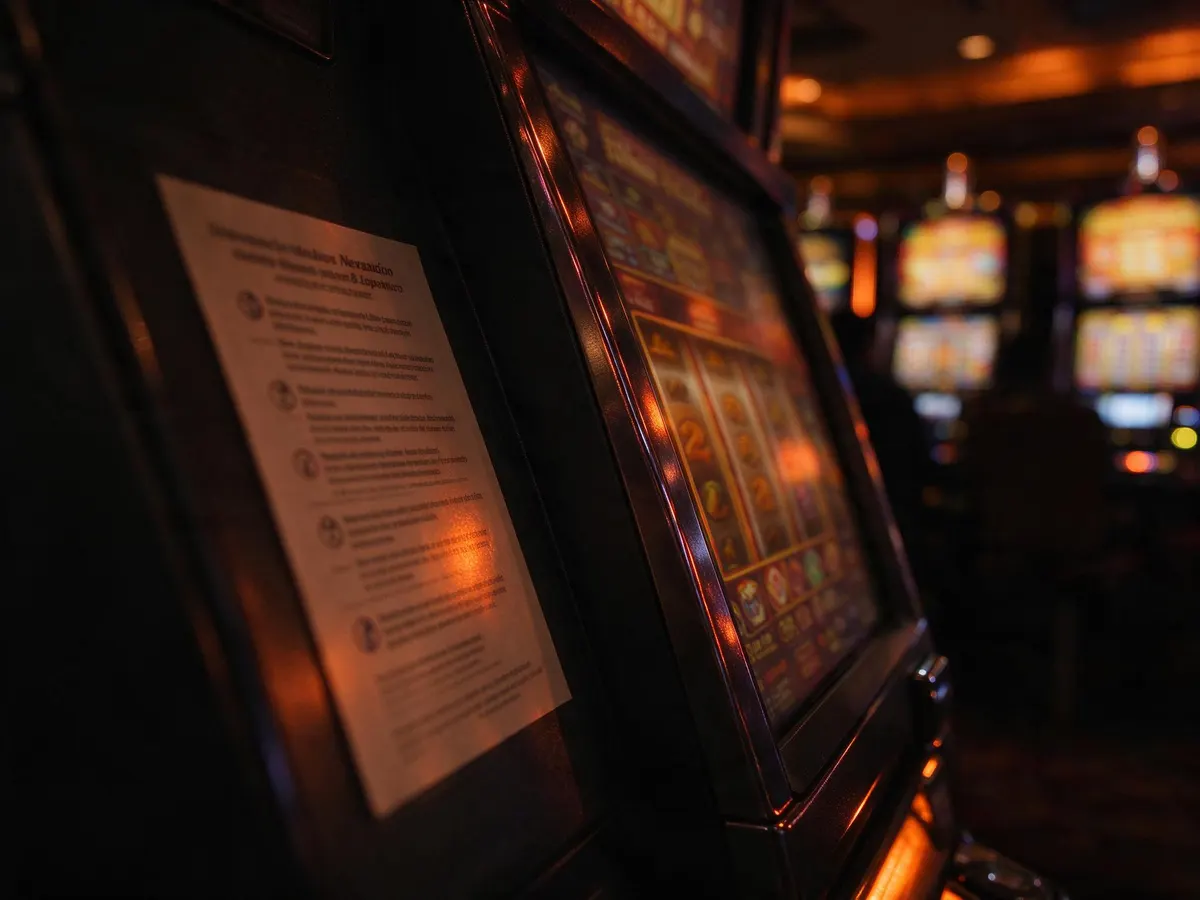
The helpline on the sign is a policy decision, not permanent plumbing
Most players assume the problem-gambling phone number stuck to the side of a slot machine is fixed public-health infrastructure, as neutral and unchanging as an exit sign. It isn’t. It’s text inside a gaming regulation, and regulators can rewrite it. Nevada just started doing exactly that: the Nevada Gaming Control Board has given initial approval to a revision of Regulation 5.170(2) that strips out any reference to the National Council on Problem Gambling and points players toward Nevada responsible gambling resources instead, specifically the state’s own nonprofit. The Nevada Gaming Commission takes up the proposal on October 22.
On paper it’s a swap of a phone number and some referral language. In context it’s a state regulator formally distancing its rulebook from the best-known national problem-gambling organisation in the country, and doing it on the record.
What Regulation 5.170(2) actually governs
Regulation 5.170 is the part of Nevada’s rules dealing with problem-gambling information and how licensees surface it. Subsection (2) is where the help number and referral information live, which is why it ends up printed on machines, posted in sportsbooks, baked into terms pages and reproduced in employee training material. Change the regulation and you change what hundreds of licensees are obliged to display.
The Control Board’s reasoning, as presented at the workshop, was jurisdictional rather than dramatic. “We believe the updated reference will initially direct those who need help to receive Nevada-specific information for referral sources,” said Cahn Lengsavath, chief of the Board’s Tax and License Division. “That way the resources are more relevant to what is going on here in Nevada and our rules.”
That argument stands up on its own merits. Treatment funding, self-exclusion mechanics and licensee obligations are all state-level. A player in Las Vegas who calls a national line gets routed somewhere eventually; a state line can refer them to in-state counselling and to the specific self-exclusion options Nevada licensees are required to honour. Plenty of regulators would make the same edit on a quiet Tuesday with nobody watching.
But nobody at the table pretended that was the whole story.
The cause: a $2 million cheque from a prediction market
Board Chair Mike Dreitzer was blunt. Removing the NCPG reference was “perfectly appropriate”, he said, and “in fact, that should very well be stricken from our regulations, given recent activities there.” Board member George Assad asked directly whether the NCPG had “hooked up with Kalshi and prediction markets”. Lengsavath said that appeared to be the case. Dreitzer kept it factual: “The facts are that the NCPG accepted a $2 million donation from Kalshi. That’s a factual statement.”
Here is the sequence that produced that exchange. In May, Kalshi, the event-contract exchange whose sports markets have become a running fight with state gaming regulators, partnered with the NCPG through a $2 million, two-year investment funding a Financial Trader Health and Safety Initiative. The NCPG created a new Financial Services and Trading subcategory of membership and made Kalshi its first Platinum-level member.
The NCPG’s defence has been consistent: it holds a neutral position on the legal status of gambling and of prediction markets, and its mission is to reduce harm wherever harm occurs. Traders who lose control are, by that logic, people who need help regardless of which regulator claims the product.
That position did not land well with the regulators and state councils who had spent the year arguing that prediction markets are unlicensed gambling wearing a financial-services badge. Memberships were pulled in protest: the Nevada Council on Problem Gambling, the Michigan Gaming Control Board, the Ohio Casino Control Commission and the Evergreen Council on Problem Gambling in Washington. NCPG Executive Director Heather Maurer resigned in late September amid the fallout. Nevada’s state council had already severed ties roughly two months before the Board took up the regulation change.
So the regulation edit isn’t the start of the dispute. It’s the point where a membership row becomes codified in a state’s rules.
The uncomfortable question underneath: who pays for player protection
Strip away the Kalshi specifics and you’re left with a problem the US responsible-gambling sector has never properly solved. Problem-gambling nonprofits are chronically underfunded relative to the size of the industry they exist alongside, which makes industry money hard to refuse. Operator sponsorships, supplier donations and trade-association support have underwritten awareness campaigns, helplines and research for years, and regulators have mostly tolerated the arrangement because the alternative is less help, not purer help.
What changed is the identity of the donor. Taking money from a licensed casino company that a state regulator already supervises is one thing. Taking seven figures from a company that several of those same regulators are actively trying to constrain is another, and it hands critics an easy line about whose interests a “neutral” advocate is serving. Whether that criticism is fair is a judgement call. That it was politically fatal to the NCPG’s standing with a bloc of state regulators is not.
There’s a second-order effect worth naming. If funding sources determine which organisations appear in rule text, player-facing referral information becomes fragmented by state, with fifty sets of language, fifty numbers and fifty sets of politics. For a player in crisis, consistency has value. “Call the number you have seen on every machine in every state” is a lower barrier than working out which body your state currently endorses.
What licensees and players should actually do
Nothing, yet, and then quite a lot of small things. The revision cleared the Control Board workshop as one item within roughly twelve pages of proposed changes, which also included scrapping the cap on private sales of two slot machines per year under Regulation 14.330(1) and adjusting how licences are surrendered under Regulation 9.010. The Commission considers the package on October 22. Only after that does it bind anyone.
If it passes, the practical compliance work for Nevada licensees is unglamorous and broad:
- Machine and signage decals carrying the old helpline reference
- Website footers, terms pages and responsible-gaming pages
- Printed collateral, player-club materials and cage notices
- Employee training decks and problem-gambling awareness programmes
- Self-exclusion paperwork and any third-party content referencing the national line
For players, the change is narrower than the headlines suggest. The regulation decides whose logo and number appear on the notice, not whether help exists. Nevada’s state council runs its own helpline and referral network, and in-state treatment is where most Nevada callers were going to end up anyway.
The sharper thing to watch is whether other states follow Nevada into the rulebook. Michigan, Ohio and Washington’s council have all walked away from NCPG membership; amending regulation text is a further step, harder to reverse and more visible to the public. If that spreads, the national helpline that US casino players have been trained for two decades to recognise starts quietly disappearing from the walls, one state regulation at a time.
If gambling has stopped being entertainment for you or someone close to you, help is available through your state’s problem-gambling helpline and self-exclusion tools, whichever organisation’s name is printed on the sign this year.
Reporting on the Control Board workshop comes from CDC Gaming.